I build machine-learning systems for clinical time series. My core research develops
frequency-domain and geometric representations of physiological signals
(FreqLens, SPD Token Transformer)
and scales them into biosignal foundation models (Large Cognition Model);
an EEG model I built is deployed in routine outpatient care at Taipei Veterans General Hospital's
Precision Depression Intervention Center (PreDIC).
I am a Research Affiliate at
Harvard Medical School and
Beth Israel Deaconess Medical Center (BIDMC),
working with Prof. Gabriel Brat
on multimodal EMS trauma triage.
I am applying to PhD programs (Fall 2027 start) in machine learning for physiological time series — interpretable, frequency-domain representations and foundation models for clinical biosignals, from EEG to EMS audio.
You can contact me at:
m50816m50816 [at] gmail.com |
chisheng.m.chen [at] gmail.com
My research asks one question: what does a model actually represent when it learns from a physiological signal, and can that representation be made legible to the clinician who has to act on it?
I pursue it along a single arc — from representation, to foundation models, to clinical deployment.
Representation: I develop interpretable, clinician-interrogable frequency-domain and geometric representations of biosignals
(FreqLens, FreqToken, SPD Token Transformer).
Foundation models: I scale these into cross-task, cross-dataset, and multimodal biosignal models
(Large Cognition Model, frequency-domain world models).
Deployment: my EEG-based depression-treatment model is in routine outpatient use at the
Precision Depression Intervention Center (PreDIC), Taipei Veterans General Hospital,
and I build multimodal EMS trauma-triage pipelines at Harvard/BIDMC.
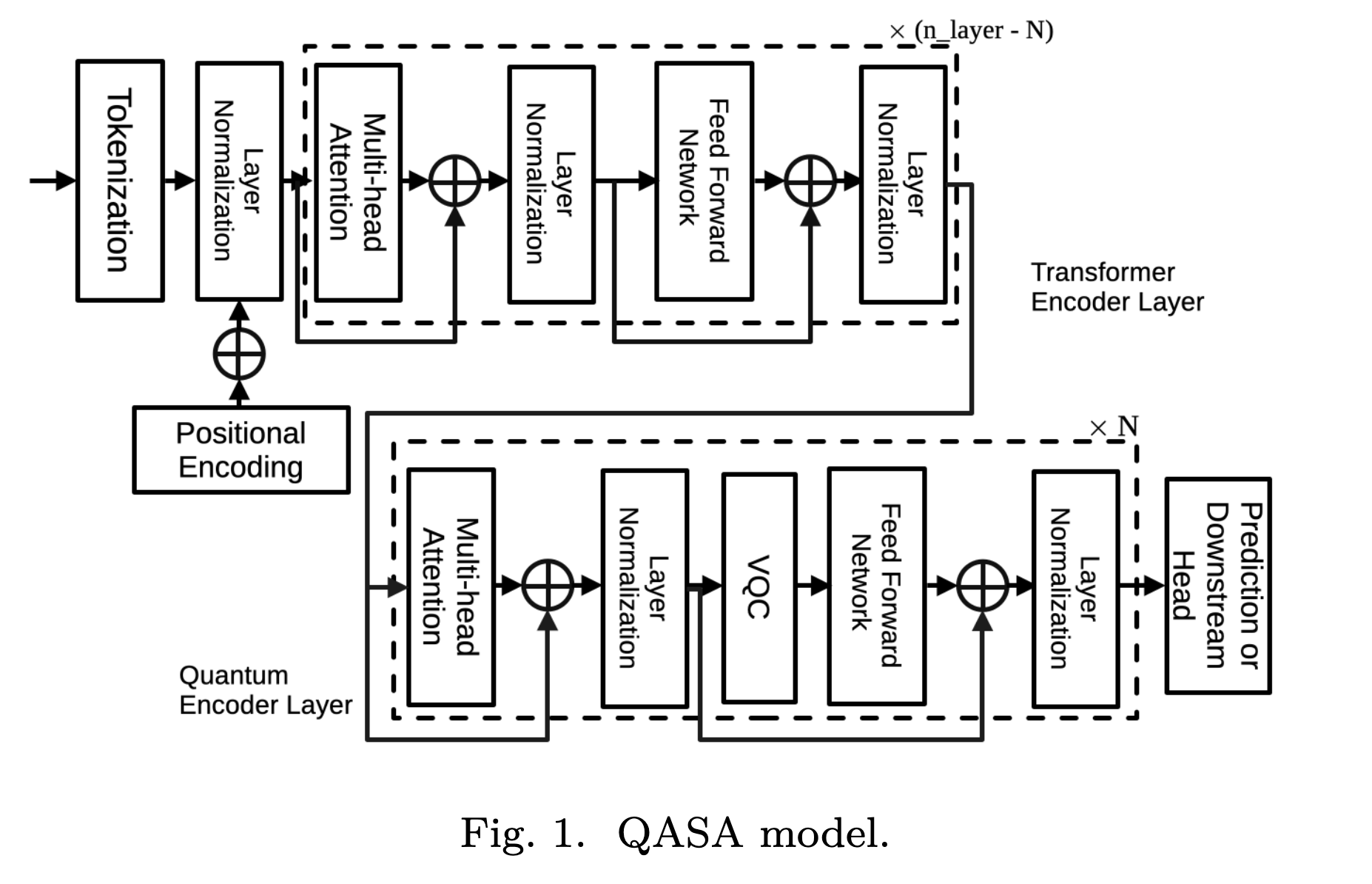
As a secondary methodological line, I explore hybrid quantum-classical architectures for sequence modeling (QASA, QEEGNet).
News
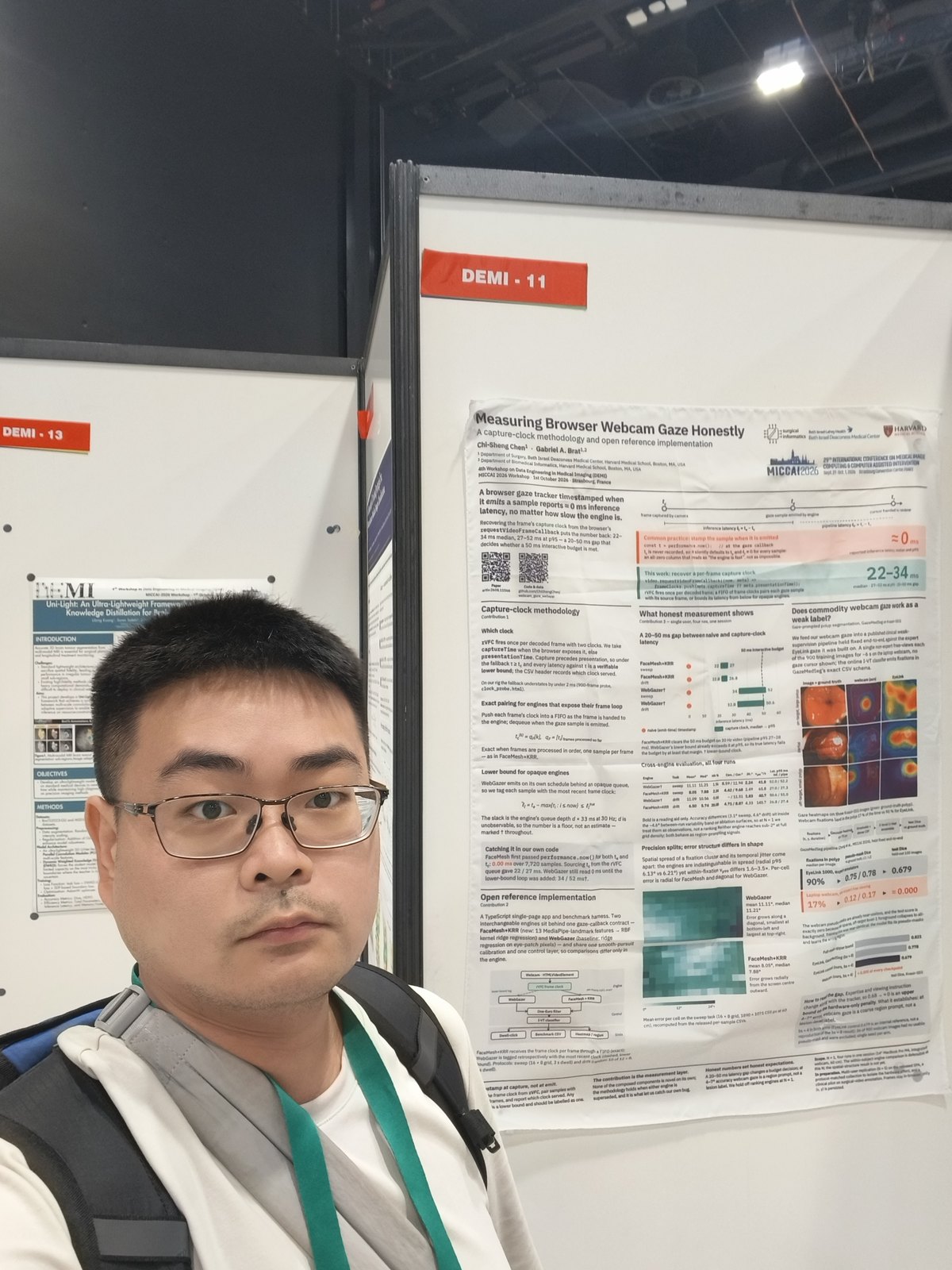
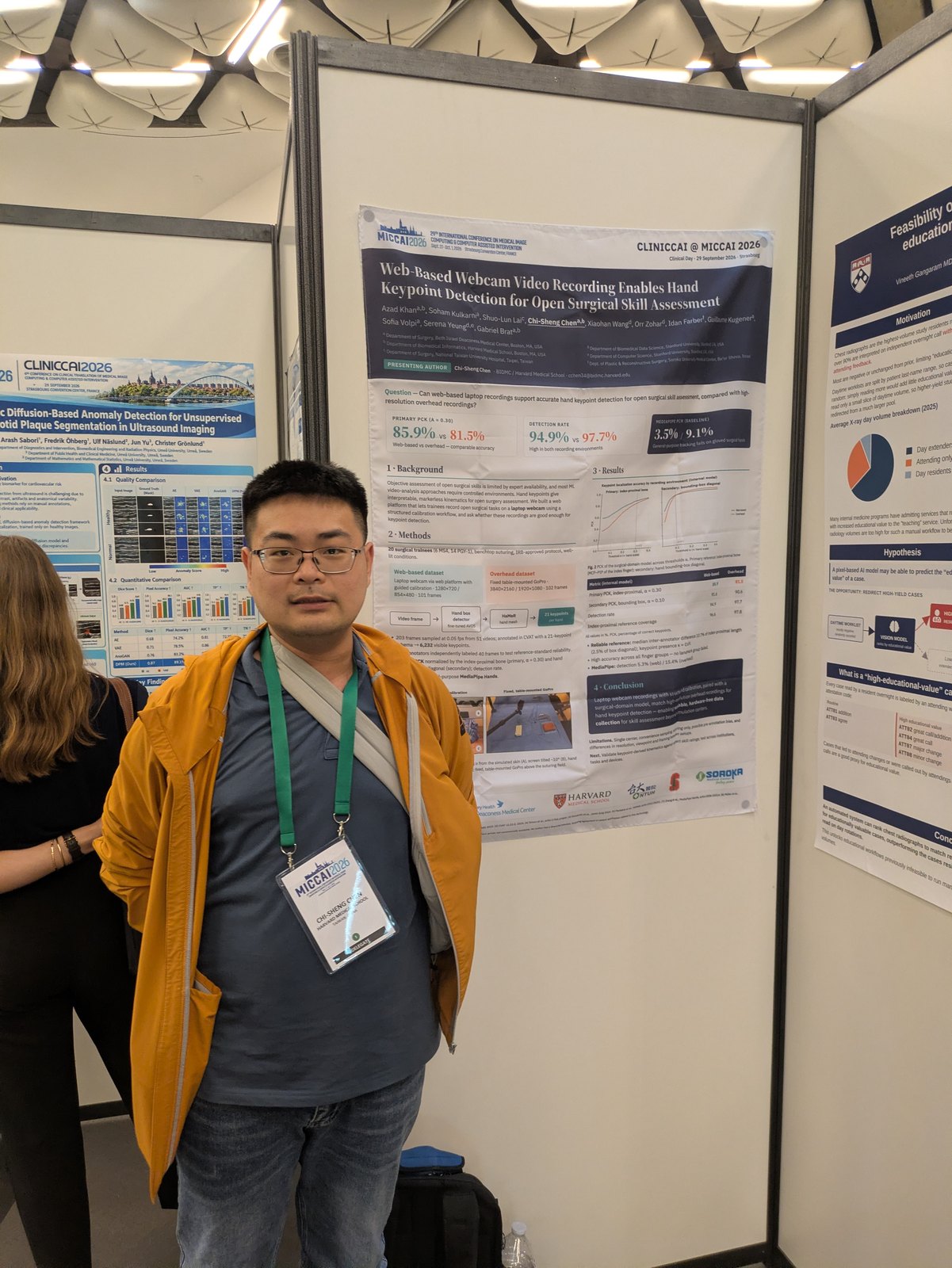
🚩 Sep–Oct 2026: Presented at MICCAI 2026, Strasbourg, France — a spotlight talk on "Measuring Browser Webcam Gaze Honestly" at the DEMI workshop, and a poster on "Web-Based Webcam Video Recording Enables Hand Keypoint Detection for Open Surgical Skill Assessment" at the CLINICCAI Clinical Day (presenting author).
🚩 Jun 2026: Two short papers accepted at Digital Humanities 2026 (DH2026), Daejeon, South Korea — "Predicting Poets' Origins from Verse" and "Gendered Voices in Tang Poetry."
🎖️ May 2026: Recognized as Gold Reviewer at ICML 2026, placing among the top reviewers based on area chair ratings.
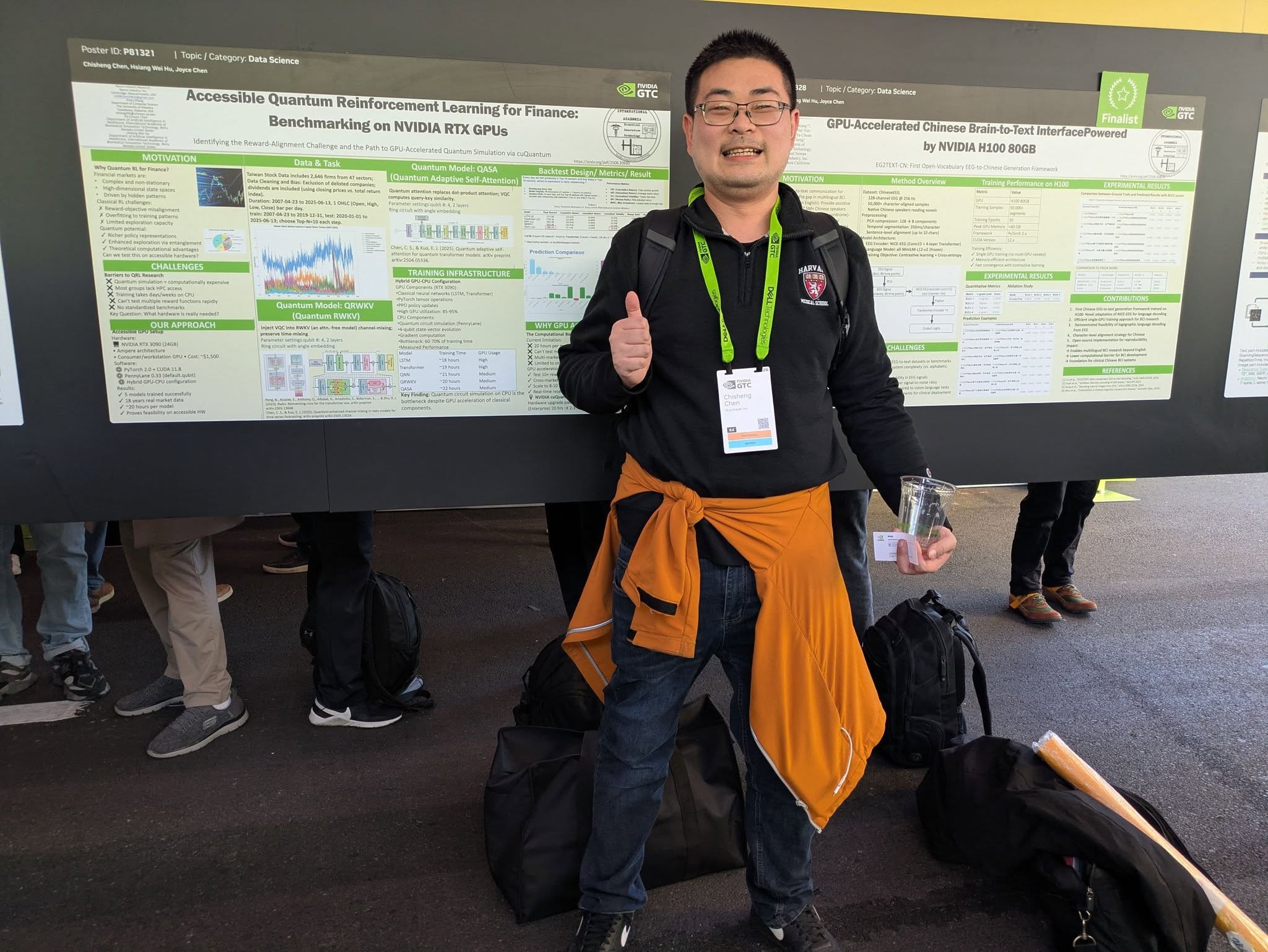
🚩 Jan 2026: Two papers accepted at IEEE ICASSP 2026 — "Quantum Reinforcement Learning-Guided Diffusion Model for Image Synthesis" (oral presentation) and "Quantum Adaptive Self-Attention for Financial Rebalancing: An Empirical Study on Automated Market Makers in Decentralized Finance" (oral presentation).
Selected Publications
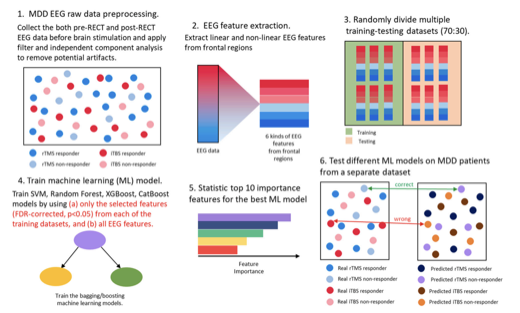
Prediction of Antidepressant Responses to Non-Invasive Brain Stimulation Using Frontal EEG Signals
CT Li, CS Chen, CM Cheng, CP Chen, JP Chen, MH Chen, YM Bai, et al. [2nd author; derived from my master's thesis]
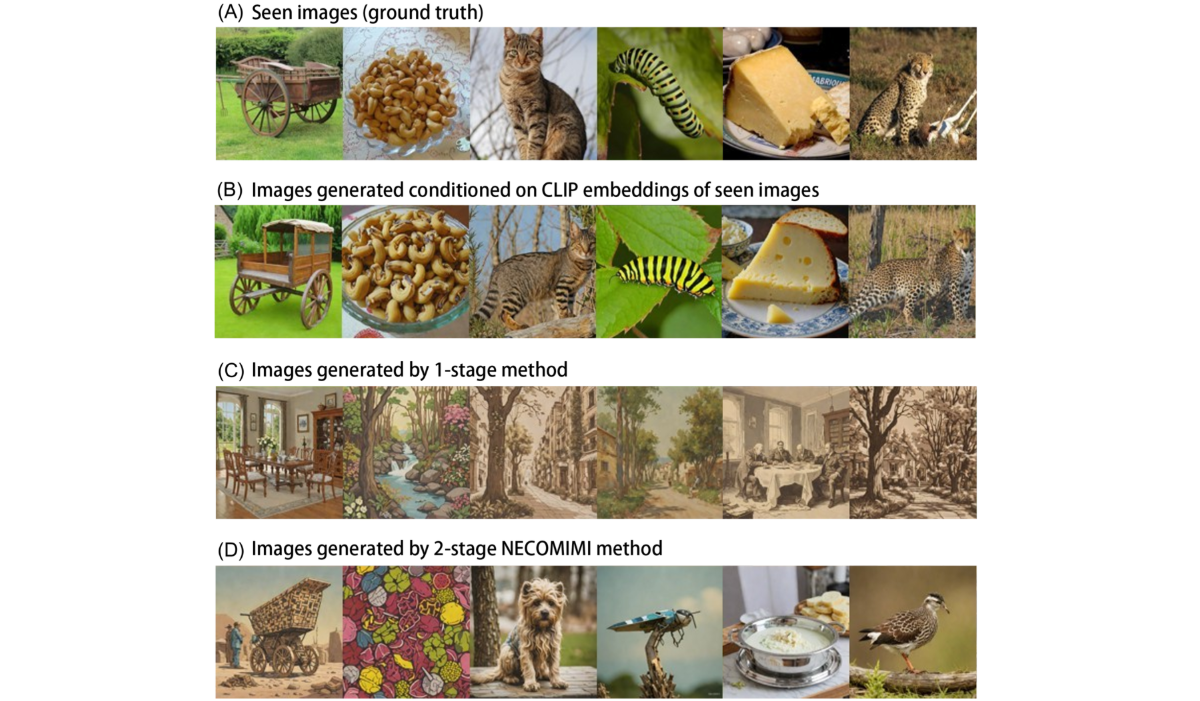
Exploring the Potential of EEG Signal-Based Image Generation Using Diffusion Models: Integrative Framework Combining Mixed Methods and Multimodal Analysis
CS Chen, SH Chang, CW Liu, TM Pan.
JMIR Medical Informatics, 13(1), e72027, 2025 (journal version of NECOMIMI)
My core research develops interpretable, clinician-interrogable representations of physiological time series,
including FreqLens for frequency-domain attribution in forecasting
and SPD Token Transformers for EEG classification with Riemannian geometry. These representations scale into
cross-task, cross-dataset biosignal foundation models (Large Cognition Model).
Clinical AI & Deployment
EEGMultimodal AIEmergency MedicinePsychiatrySpeech & ASR
Developing AI systems for clinical neuroscience and emergency medicine.
My EEG-based depression treatment prediction models have been Clinically Deployed at the
Precision Depression Intervention Center (PreDIC)
at Taipei Veterans General Hospital, serving real outpatient patients.
At Harvard/BIDMC, I am building real-time EMS triage pipelines using multimodal AI for trauma prediction,
collaborating with surgeons on AI-assisted decision support systems.
I also develop multimodal contrastive learning methods for EEG-image alignment, such as MUSE.
The EMS pipeline also carries the speech and language layer — ASR transcription of EMS audio, automated clinical documentation and emergency-page generation.
Earlier clinical work applied deep learning to intraoperative surgical-gauze detection for operating-room safety.
As a secondary methodological line, I explore hybrid quantum-classical architectures for time-series and sequential data,
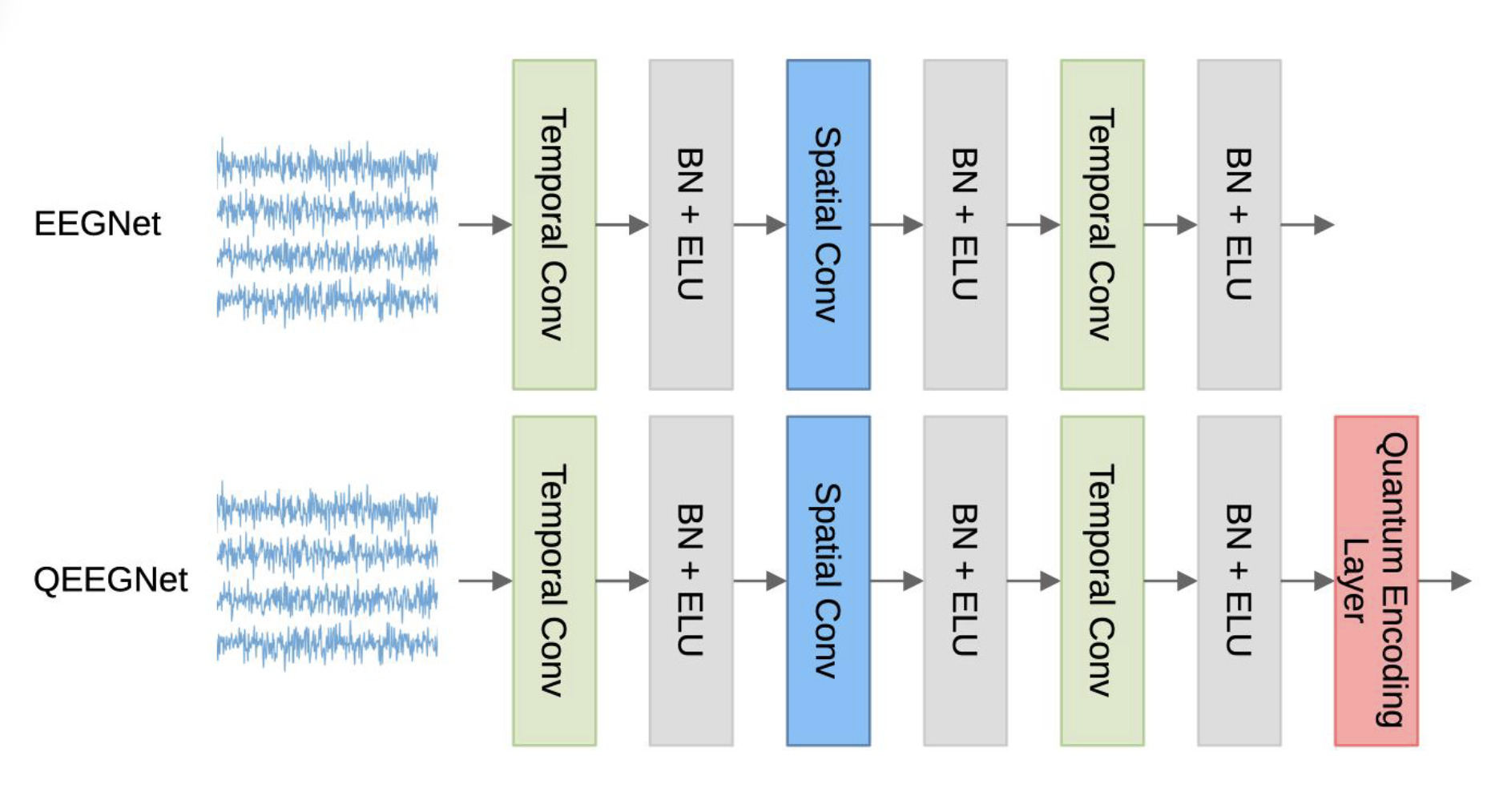
including the Quantum Adaptive Self-Attention (QASA) Transformer, QuantumRWKV, and QEEGNet for quantum EEG classification.
Applications span EEG signal processing, financial time-series forecasting, and image generation.
Research Experience
Department of Surgery, Harvard Medical School & Beth Israel Deaconess Medical CenterMA, USA
Research Affiliate (primary appointment), Advisor: Prof. Dr. Gabriel BratNov 2024 – Present
Building a real-time EMS trauma-triage pipeline (ASR → LLM-agent event extraction → structured prediction) over 4M+ patient records using multimodal AI.
Co-developed webcam-based open-surgical skill assessment (hand keypoint detection; CLINICCAI 2026 poster) and a capture-clock methodology for browser webcam gaze (DEMI 2026 spotlight talk).
Neuro Industry, Inc.CA, USA
Researcher, Co-Founder & CTOMar 2024 – Jan 2025
Built GCP-based MLOps pipeline, enabling training on 10K+ EEG samples.
2 research papers on quantum machine learning on EEG signal processing.
1 research paper on EEG-to-image using diffusion model.
Department of Computer Science, National Yang Ming Chiao Tung UniversityHsinchu, Taiwan
Searching new possible unconventional superconductors among Co-based quaternary chalcogenides with diamond-like structure CuInCo₂A₄ / AgInCo₂A₄ (A = Te, Se, S).
Fractional Token Efficiency Research Lead (Advisor)Aug 2026 – Present
Advising the AI × quantitative-trading division of VICI Holdings (Taiwan's leading proprietary high-frequency trading firm) on LLM token-efficiency research, multi-agent architecture, and financial data extraction.
Contributed to Reinforcement Learning from Human Feedback (RLHF) pipelines through high-complexity AI data labeling, preference rankings, and model-behavior assessments for instruction following, multimodal reasoning, and safety alignment.
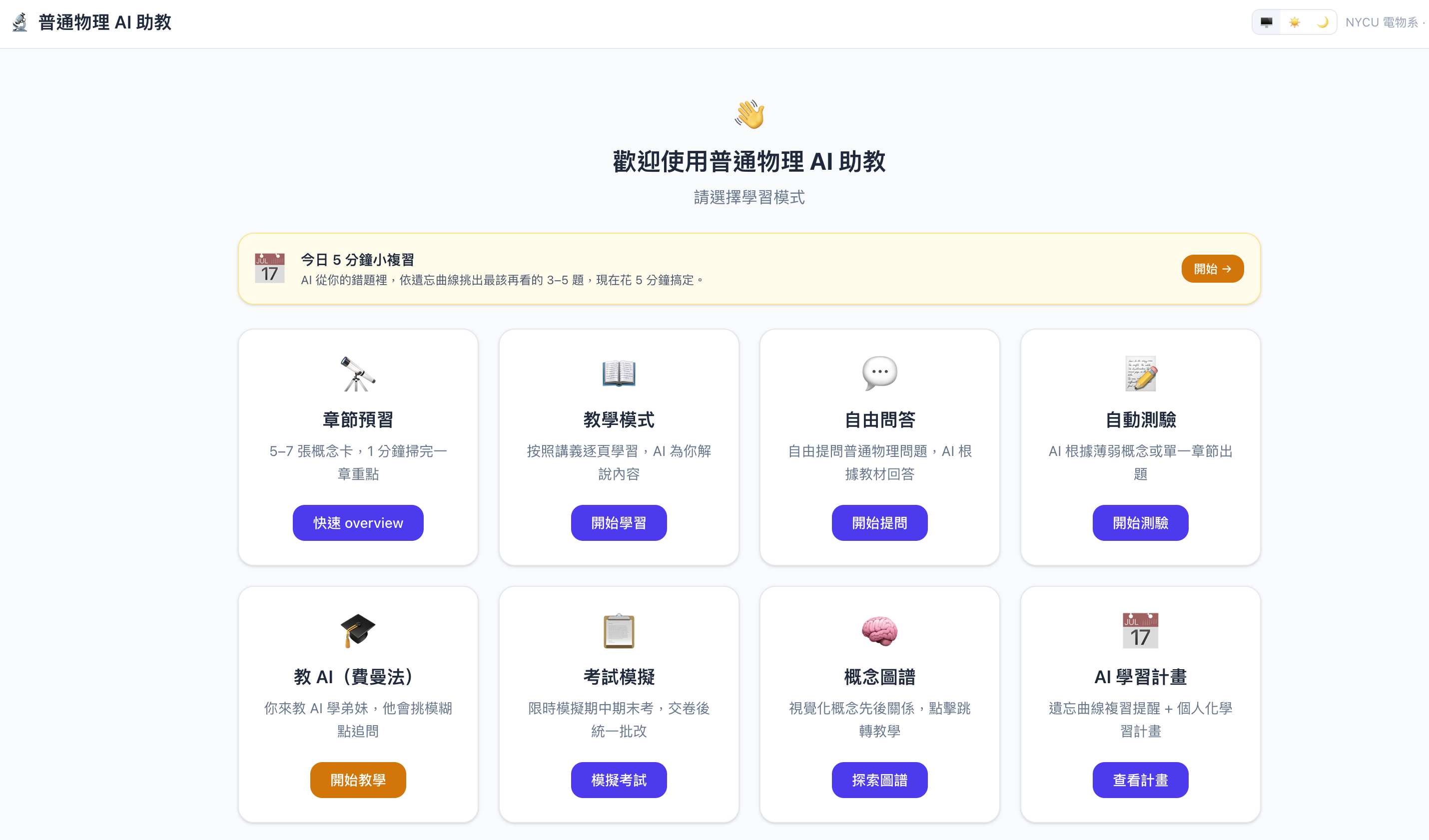
Designed and deployed a comprehensive RAG-based AI tutoring system for the "General Physics" course at NYCU.
Expanded feature set covering full undergraduate physics curriculum with adaptive content delivery,
problem-solving guidance, and concept reinforcement.
Next.jsRAGGemini AISupabasepgvectorVercel AI SDKServing NYCU Students
Laser Physics AI Teaching Assistant
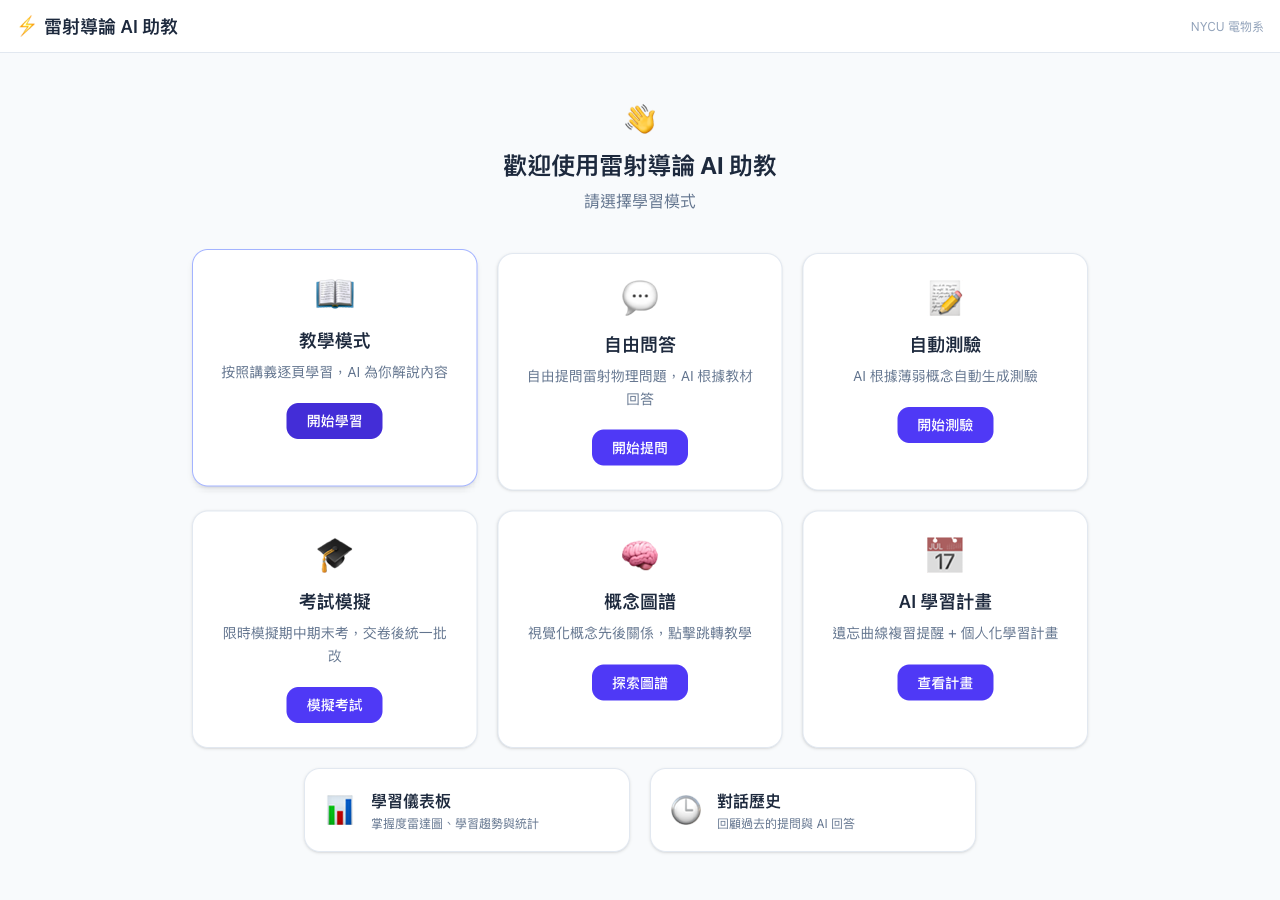
Designed and deployed a RAG-based AI tutoring system for the "Introduction to Lasers" course at NYCU Department of Electrophysics.
Features 8 learning modes including adaptive quiz generation, exam simulation,
interactive concept knowledge graph, and spaced-repetition study planning.
Guided undergraduate students through wet-lab experiments: Biological Safety Cabinet operation, E. coli transformation, PCR, gel electrophoresis, and plasmid purification.
Designed lab protocols and assessment rubrics; held weekly office hours and one-on-one troubleshooting sessions.
Invited Talks & Presentations
Guest Lecture Series — Introduction to Biomedical Engineering (醫學工程概論), Department of Biomedical Engineering, Chang Gung University — Taoyuan, Taiwan
"Web-Based Webcam Video Recording Enables Hand Keypoint Detection for Open Surgical Skill Assessment"
A Khan, S Kulkarni, SL Lai, CS Chen, X Wang, O Zohar, I Farber, G Kugener, S Volpi, S Yeung, GA Brat.
1. "Predicting Poets' Origins from Verse: A Computational Analysis of Regional Linguistic Fingerprints in the Complete Tang Poems"
2. "Gendered Voices in Tang Poetry: A Corpus-Based Study of Female-Authored Poems and Male-Adopted Female Perspectives"
NLPDigital Humanities
IEEE ICASSP 2026 — Barcelona, Spain
Two oral presentations, May 2026
1. "Quantum Reinforcement Learning-Guided Diffusion Model for Image Synthesis via Hybrid Quantum-Classical Generative Model Architectures"
2. "Quantum Adaptive Self-Attention for Financial Rebalancing: An Empirical Study on Automated Market Makers in Decentralized Finance"
2023: Certificate of the 20th National Innovation Award (Taiwan), clinical research category — for the EEG treatment-response model now deployed at Taipei VGH PreDIC.
2019: International Blockchain Olympiad (IBCOL): World Finalist competition (100+ teams).
2017: Microsoft International Imagine Cup: 2nd place in Taiwan.
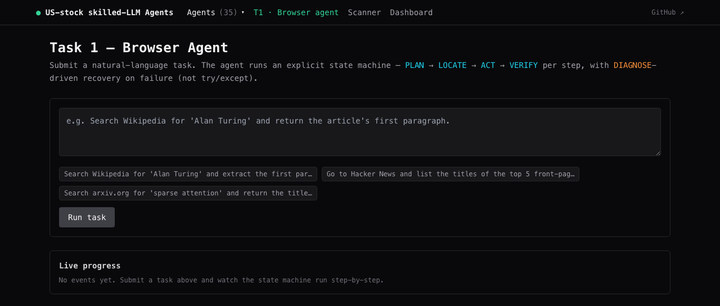
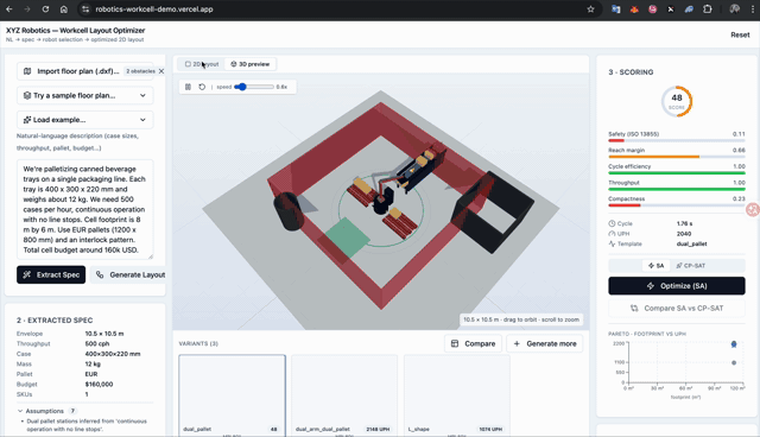
Shippable, agentic-AI deliverables — LLM/agent systems that run in production, rank in open competition, or ship as open-source libraries — plus contract and production engineering.
Independent · Live & deployed · 2026 — led to advisory role at VICI Holdings' WhaleForce division
A browser agent built as an explicit state machine with deterministic fault-injection recovery; a layered SEC 10-K item extractor (L1→L3 with confidence calibration); and a Strategy Lab of 22 research agents + 11 placebo controls, each with lookahead-free backtests, a per-provider cost ledger, and eval dashboards.
flyhypo — Grounded Functional-Hypothesis Generator for Fly Neurons
Independent · Proof of concept · 2026
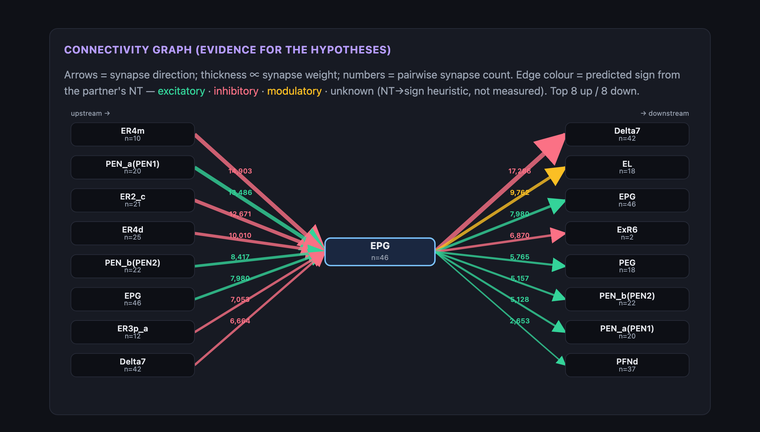
Combines connectome structure (neuPrint) with literature evidence (PubMed) and an LLM (Gemini) to generate falsifiable functional hypotheses for Drosophila cell types — every claim traced to a specific paper id or connectivity number, with verification guards (verbatim re-grep, mis-attribution, number-existence) so it never fabricates.
paper-evidence — Grounding LLM Claims in Scientific Literature
Independent · Open-source library · 2026
A verification core where a claim about a source survives only if the source verifiably supports it: a verbatim-quote gate, numbers-must-sit-next-to-their-quote, and an independent cross-family LLM judge for paraphrase/citation faithfulness — plus a literature extractor (saturation search, citation snowball, recall scoring).
Berkeley RDI AgentX–AgentBeats · 3rd Place / 1,300+ teams · 2026
Co-built a multi-agent LLM evaluation system with role-specialized agents (examiner, patient, judge) and a verifiable scoring rubric (RAG + tool use + verifier).
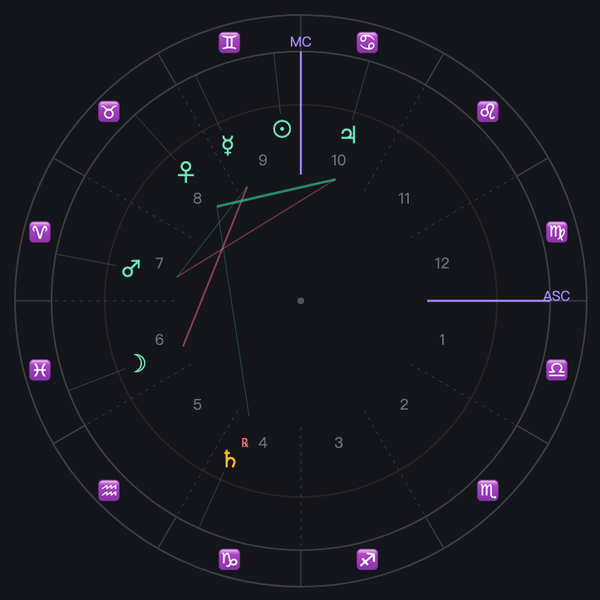
Eleven traditional divination systems as deterministic Python engines (planet positions validated against Swiss Ephemeris to <0.006°) with streaming bilingual English/中文 LLM readings. Originated as placebo controls in a quant project, then rebuilt as a standalone full-stack app.
Co-Founder & Lead AI/Quant Engineer · Live in production · 2024–May 2026
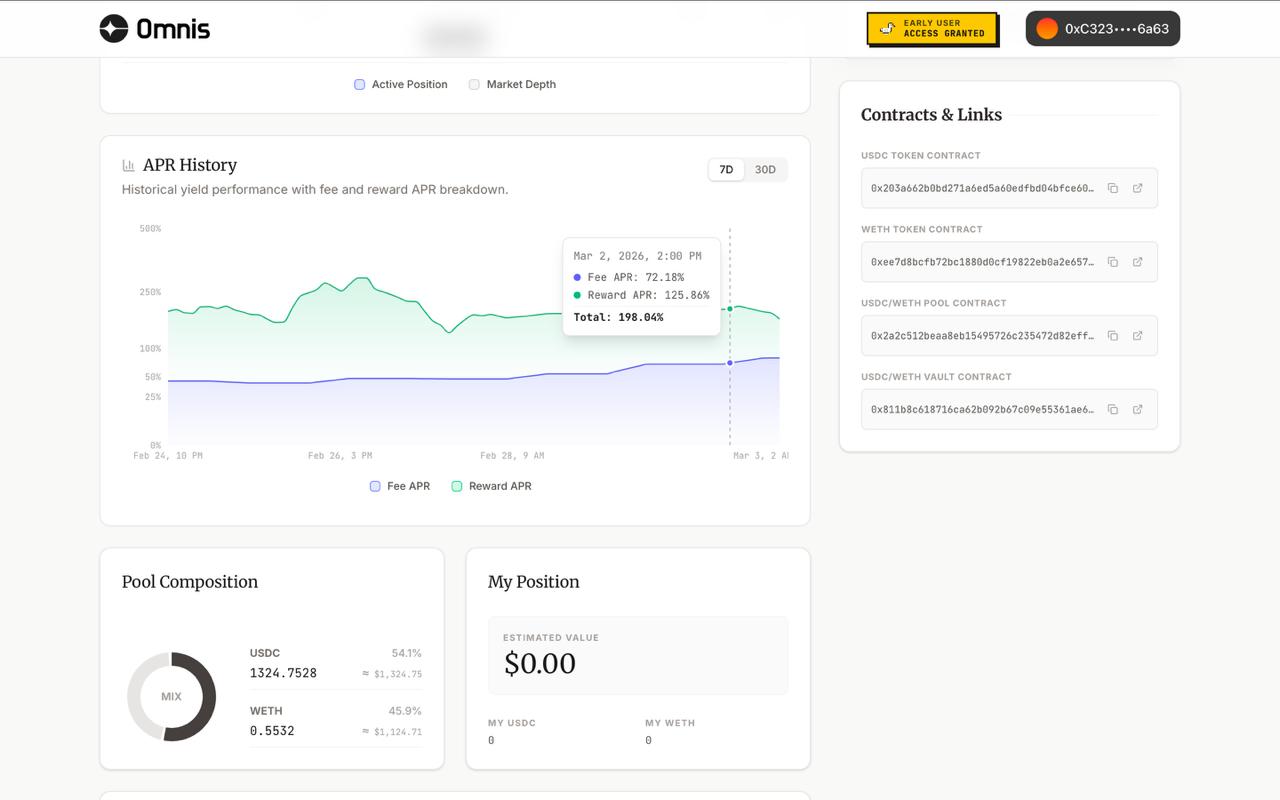
Automated market-maker strategies driven by time-series ML with full backtesting and MLOps (Docker, CI/CD, on-chain event pipeline, live P&L observability). Production results: 50%–120% base fee APR on WBTC/USDC and ETH/USDC pairs.
RLHF / Alignment — Contract for OpenAI (via Mercor)
Contract · Remote (US) · Mar 2025 – Oct 2025
Preference rankings and model-behavior assessments feeding SFT, DPO, and reward modeling across hard reasoning, code, tool-use, and safety-alignment prompts; drove rubric design that improved labeling consistency on ambiguous edges.